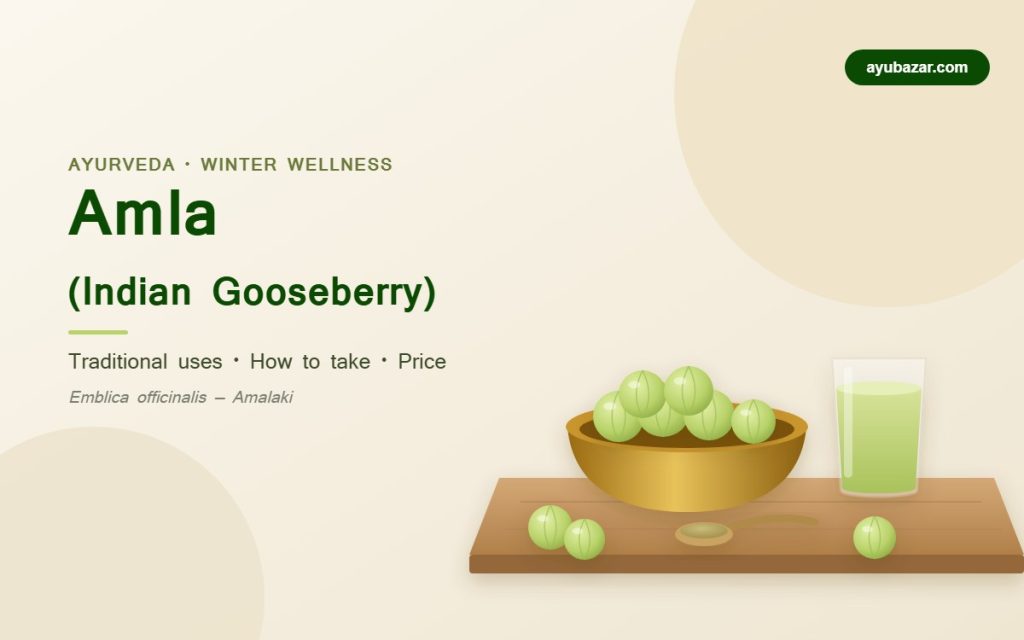
Winter is amla season in India. From Gujarat’s markets to Kartik-month kitchens, the small sour-green fruit shows up as murabba, pickle, juice and churna. In Ayurveda, amla (Amalaki, Emblica officinalis) is one of the most respected herbs — the main ingredient of Chyawanprash and one of the three fruits in Triphala. This guide explains how amla is traditionally used, the different forms you can buy, how people usually take them, and what to check before you order online.
What is Amla in Ayurveda?
Classical texts call amla a Rasayana — a rejuvenating herb traditionally used to support overall strength and vitality. It is said to carry five of the six tastes (all except salty), with sourness strongest. Unlike many sour foods, amla is described as cooling, which is why it is traditionally considered suitable for balancing Pitta while also supporting Vata and Kapha.
Amla is also naturally rich in vitamin C, which is one reason it is popular as a seasonal food in the colder months.
Traditional Uses of Amla
In Ayurvedic practice, amla has traditionally been used to:
- Support daily immunity and vitality as a Rasayana, especially in winter.
- Support digestion and comfortable bowel habits — it is one of the three fruits of Triphala.
- Support a balanced Pitta, including occasional feelings of heat or acidity after meals.
- Support healthy hair and skin — amla is used in hair oils and taken internally for nourishment.
- Support eye health as part of a nourishing daily routine.
These are traditional uses. Amla is a supportive herb, not a cure or treatment for any disease.
Amla Juice vs Churna vs Amalaki Rasayan: Which Form?
Amla Juice
Ready-to-drink amla juice is the most popular form today. It is easy to take with water in the morning. Look for juice without added sugar or artificial colour. Example: Zandu Amla Juice.
Amla Churna (Powder)
Dried amla powder is the classical form. It is economical, easy to mix with water or honey, and lasts longer than juice. Examples: Zandu Amla Churna and Bhatia Distributors Amla Powder.
Amalaki Rasayan Tablets
Amalaki Rasayan is a classical preparation in which amla powder is processed repeatedly with amla juice. Tablets are convenient for travel and fixed dosing. Examples: Punarvasu Amalaki Rasayan and Dhanvantari Amalaki Rasayan Tablet.
Fresh Amla, Murabba and Candy
Fresh amla is widely available from November to February. Murabba and candy are tasty but contain sugar, so treat them as occasional foods.
How to Take Amla
Always follow the label on your product or your vaidya’s advice. Commonly followed practices include:
- Amla juice: usually taken diluted in a glass of water, often in the morning.
- Amla churna: traditionally taken with lukewarm water or honey, usually once or twice a day.
- Amalaki Rasayan tablets: as directed on the pack.
Tips: start with a small quantity, take it consistently rather than in large amounts, and rinse your mouth after juice because of its acidity.
Who Should Be Careful?
Amla is a food herb, but it is still wise to speak to your doctor or vaidya before regular use if you:
- are pregnant or breastfeeding,
- take regular medicines (for example, blood thinners or medicines for blood sugar or blood pressure),
- have a sensitive stomach that reacts to sour foods, or
- are giving it to a child.
Amla Products: Price Online
Prices on Ayubazar (checked 11 Nov 2026; may change):
| Product | Pack | Price |
|---|---|---|
| Bhatia Distributors Amla Powder | 100 g | ₹50 |
| Zandu Amla Churna | 120 g | ₹104 |
| Zandu Amla Juice | 500 ml / 1 L | ₹135 / ₹223 |
| Punarvasu Amalaki Rasayan | 60 tabs / 120 tabs / 500 g | ₹126 / ₹243 / ₹1,529 |
| Dhanvantari Amalaki Rasayan Tablet | 120 tabs / 500 g | ₹131 / ₹963 |
Buying Amla Products Online in India
When you buy amla online, check the brand and manufacturer, ingredient list (no added sugar for juice), pack size and expiry date. On Ayubazar you can compare amla juice, churna and Amalaki Rasayan from several brands in one place.
Why order from Ayubazar?
- Rooted in Narayani Pharmacy since 1997, online since 2017.
- 6000+ products from 80+ Ayurvedic brands.
- Free shipping above ₹499 and Cash on Delivery available.
- Orders placed before 6 pm IST are dispatched the same day. Delivery: Gujarat 1–3 business days; other states 5–7 (remote areas up to 10).
- Shipping within India. For international orders, WhatsApp +91 94285 60666.
Need help choosing? Call or WhatsApp +91 94285 60666 or email support@ayubazar.com.
Frequently Asked Questions
Can I take amla juice every day?
Many people take amla juice daily as part of their routine. Follow the dose on the label, and consult your doctor or vaidya if you have a health condition or take regular medicines.
What is the best time to take amla?
Amla juice is commonly taken in the morning. Churna is often taken with water or honey once or twice a day. Your vaidya can advise the timing that suits your Prakriti.
What is the difference between amla churna and Amalaki Rasayan?
Amla churna is plain dried amla powder. Amalaki Rasayan is a classical preparation where the powder is processed with amla juice several times and is traditionally used as a rejuvenating tonic.
Is amla good in winter?
Yes, amla is in season in winter and is traditionally eaten fresh or as juice, churna or Chyawanprash during the colder months.
Disclaimer: This article is for general information only. Amla is traditionally used to support wellbeing; it is not intended to diagnose, treat, cure or prevent any disease. Please consult your doctor or a qualified Ayurvedic vaidya before starting any herbal product, especially if you are pregnant, breastfeeding, taking medicines or have a medical condition.
हिंदी में पढ़ें: आंवला के फायदे